01
Start with a bin audit
10 minutes
Questions about low waste living?
Monday to Friday, 9:00 AM – 6:00 PM
+44 20 7946 0821
Contact GreenLoopZero waste starter guide
Zero waste living gets presented as an all-or-nothing lifestyle, which is why most people give up in the first month. This guide takes the opposite approach. It is built around small changes that fit into an ordinary UK home, and it assumes you are starting from zero: no special equipment, no bulk store membership, no garden.
10 minutes
One month
Biggest win
Five items
The honest definition
Taken literally, zero waste is impossible for most households. Supply chains generate waste before anything reaches your kitchen. So the phrase is used as a direction of travel rather than a destination. The goal is to send less to landfill and incineration, and to reuse more of what you already own.
Some people track this obsessively, weighing their bin contents each week. You do not have to. A reasonable target for a beginner is halving what you throw away over six months, mostly by changing food and packaging habits. That is the shape of the whole low waste home guide: fewer bags out of the door, more of what you own kept in use.
A working target
Halve what you throw away over six months, mostly by changing food and packaging habits.
The waste hierarchy
The waste hierarchy is the backbone of zero waste living. Most beginners jump straight to recycling because it is familiar, then wonder why nothing changes. Read them top to bottom, in order of priority.
The strongest move and the least discussed. A freebie you did not ask for, a plastic bag you do not need, a takeaway fork you will never use. Each refusal is a small waste stream that never starts. This is the single most effective of the zero waste tips for beginners, and the least expensive.
Buy less and buy better. The most useful sustainable shopping tips are unglamorous: a shopping list, a meal plan, and a smaller pantry that gets used before it goes off. Fewer things coming in means fewer things going out.
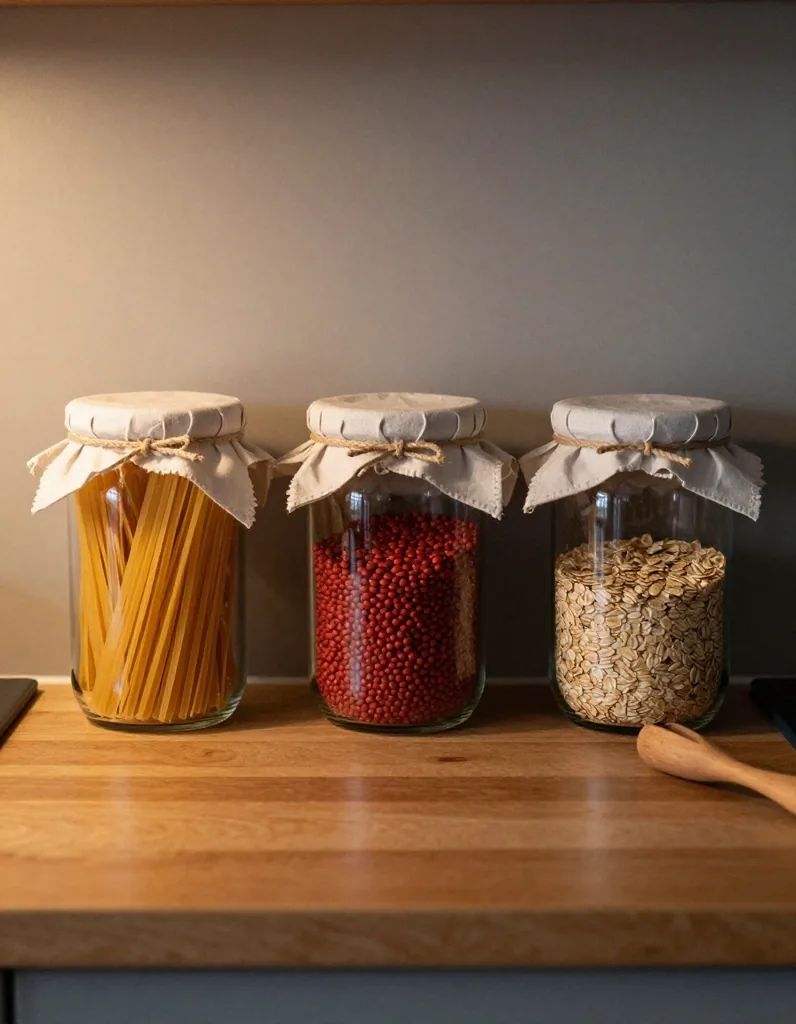
Most of the items leaving your home already work. Glass jars store dry goods, denim offcuts become cleaning cloths, and produce bags live in the boot of the car. Reusing everyday items is free, which is why it belongs above recycling in the hierarchy.
Useful, but the last resort before the bin. The upcycling vs recycling difference matters here: recycling breaks material down to make something new, upcycling keeps the item in one piece and gives it a second job. Both beat landfill, and neither replaces refusing.
Composting food scraps at home covers the food you cannot eat. If you have a garden, a bin handles it. If you do not, a countertop caddy and a council collection do the same job without the smell.
Before you change anything
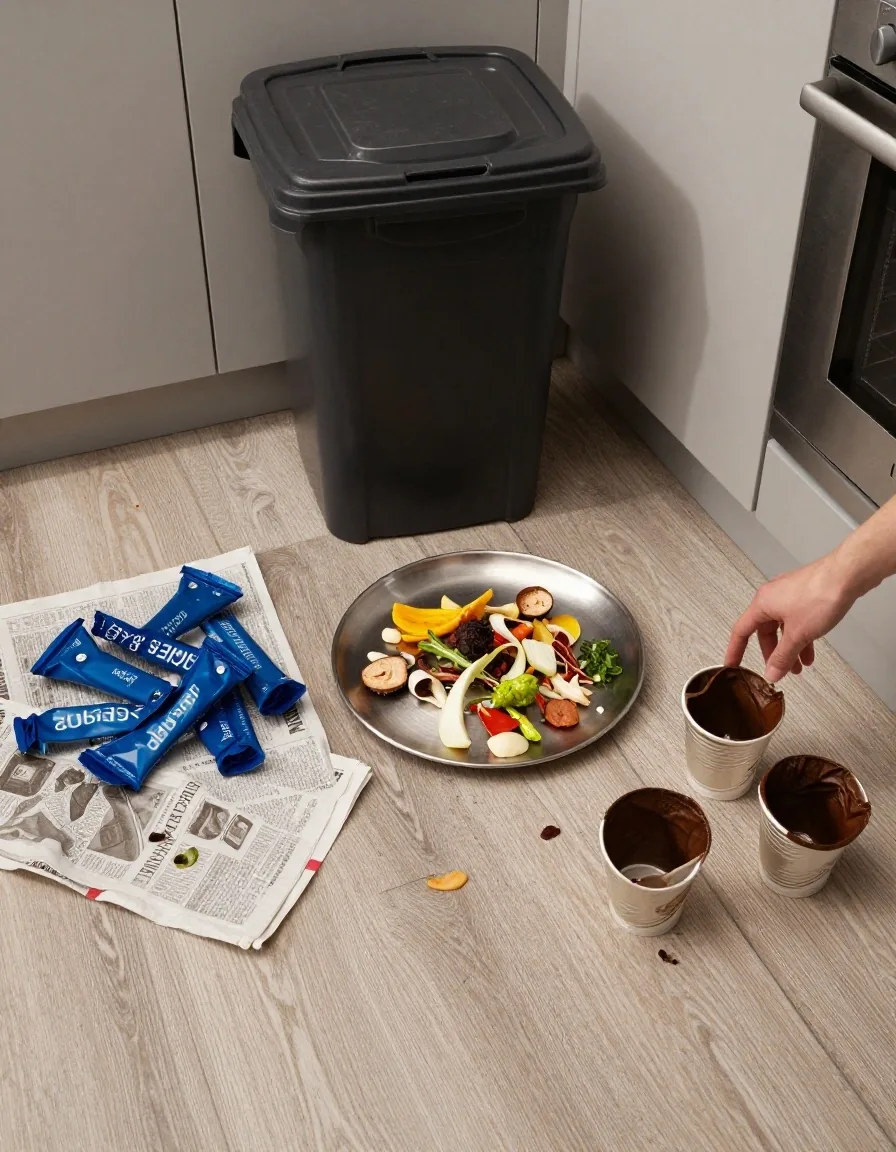
Before you change anything, look at what you actually throw away. Empty your kitchen bin onto a sheet of newspaper, or just keep a note for a week. You will usually find one or two categories dominate: food scraps, soft plastics, or coffee cups.
Your audit tells you where to start. If food is the biggest item, composting or meal planning will do more than any reusable bag. If it is packaging, shopping habits are the target. The audit takes ten minutes and prevents months of effort in the wrong place — which is the most common way to reduce household waste badly.
Where most people begin
Most people manage three swaps without much friction. None of them require a lifestyle change, only a one-time purchase or a raid of the cupboard. Live with these three for a month before adding more.
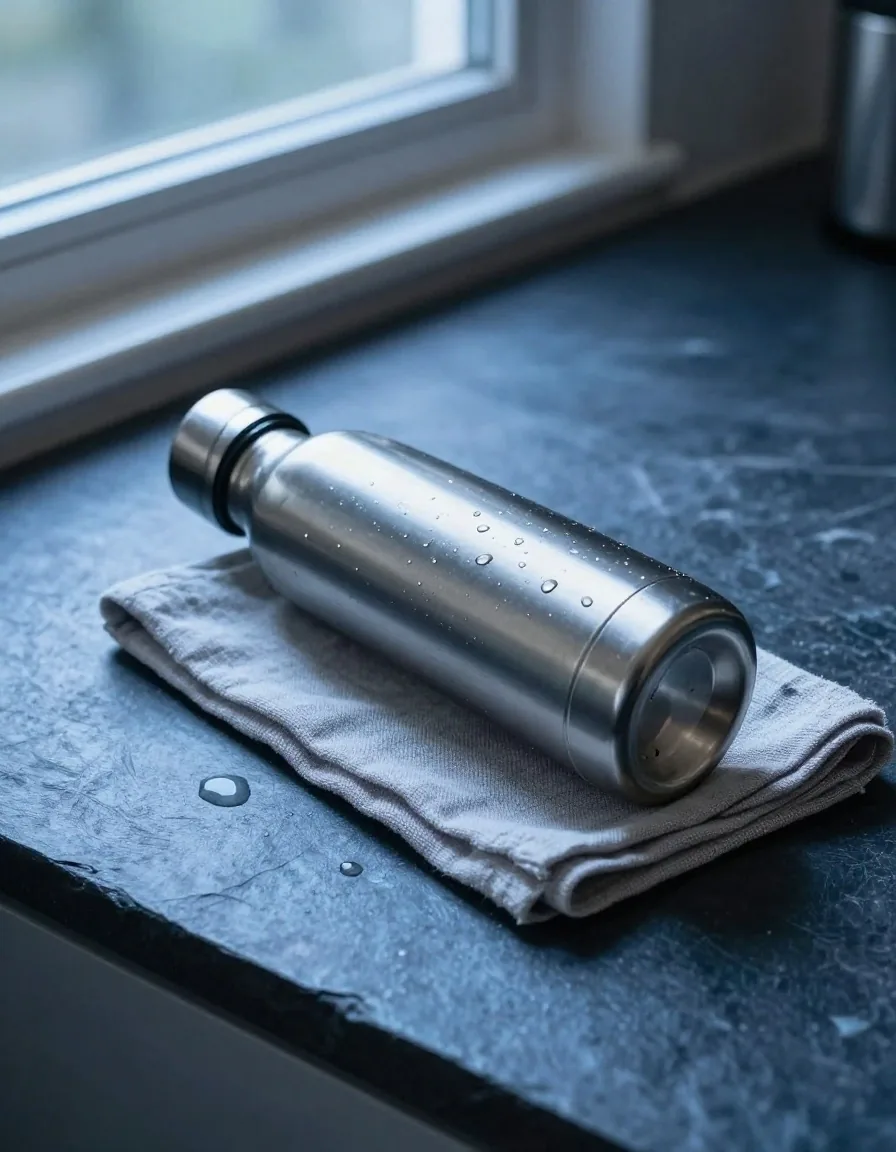
Replaces bottled water. A single bottle handles a commute, a desk, and a walk without a single plastic lid.
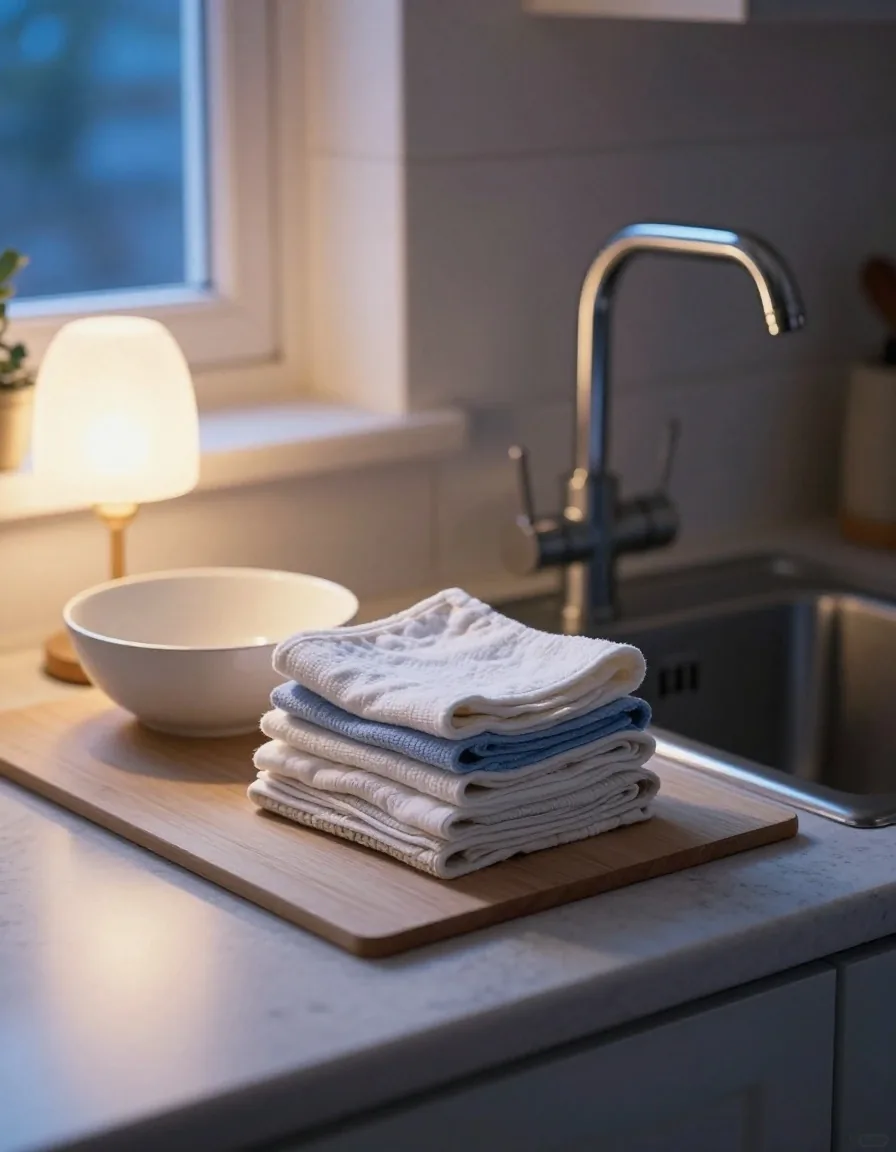
Replaces kitchen roll. Old t-shirts cut into squares work equally well, and they are free. Wash hot, reuse for months.
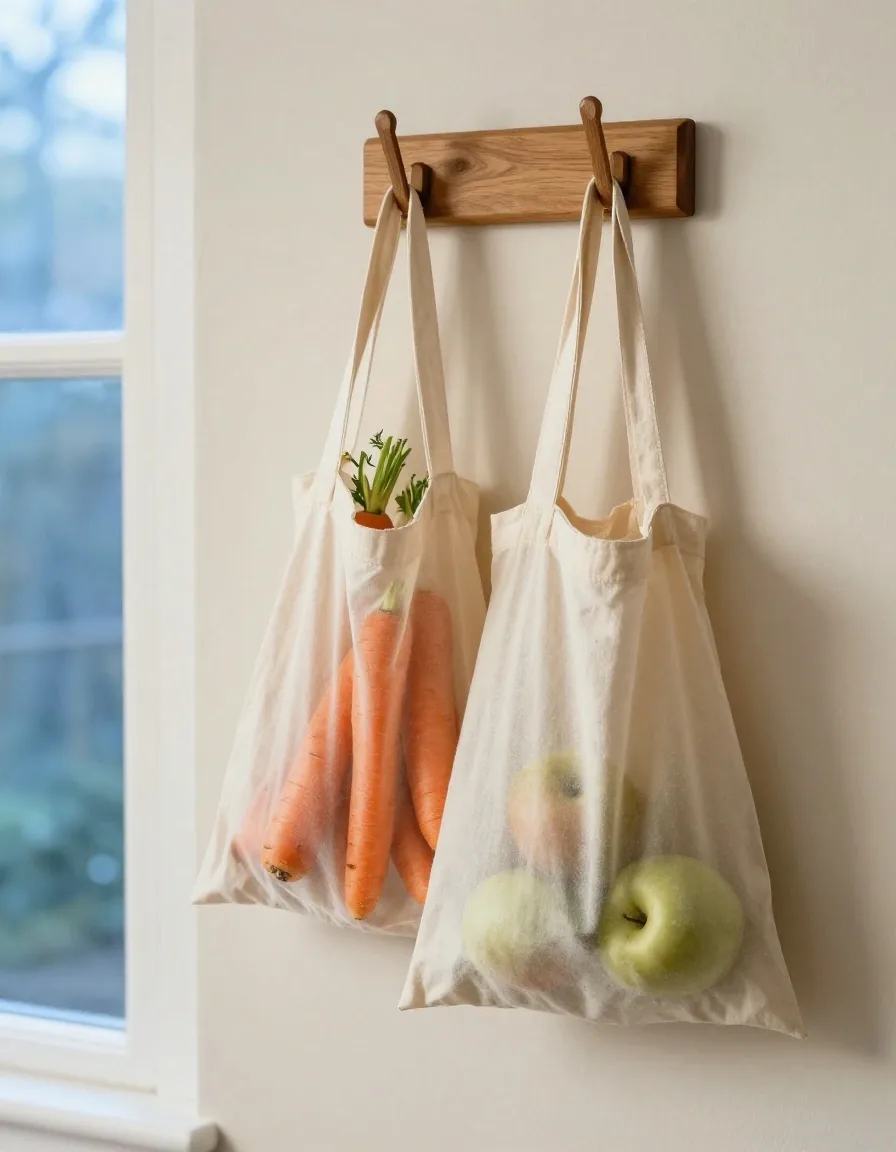
Replaces the thin plastic bags from the supermarket. One reusable produce bags guide worth knowing: keep them in your coat pocket or boot so you never forget them.
The biggest single win
UK households throw away a substantial share of the food they buy, and most of it is avoidable. The fixes are unglamorous: plan meals, shop with a list, store food properly, and eat leftovers. A loaf of bread kept in the freezer lasts far longer than one in a bread bin.
If you have space, a compost bin handles what you cannot eat. If not, a countertop caddy and a council collection do the job. Either way, food scraps stop being rubbish and start being a resource. This is the part of the low waste home guide where most beginners see the bin get visibly smaller within a few weeks.
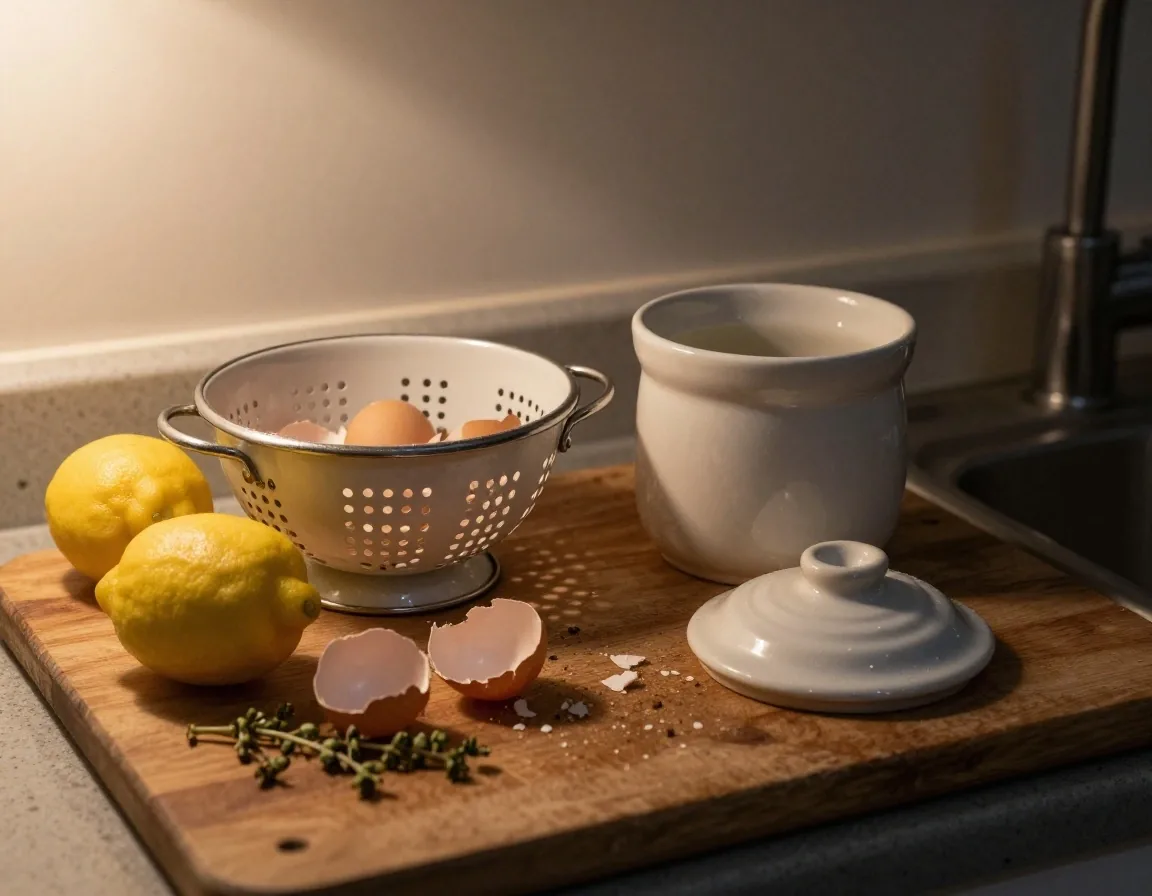
Plan and list
A weekly meal plan and a written list cut the top of food waste off at the source.
Freeze and store
Bread, herbs, and half-used vegetables keep far longer in the freezer or a sealed jar.
Eat the leftovers
Last night's dinner is tomorrow's lunch. The single easiest habit to make stick.
Compost the rest
Scraps stop being rubbish and start feeding soil, in a bin or a kitchen caddy.
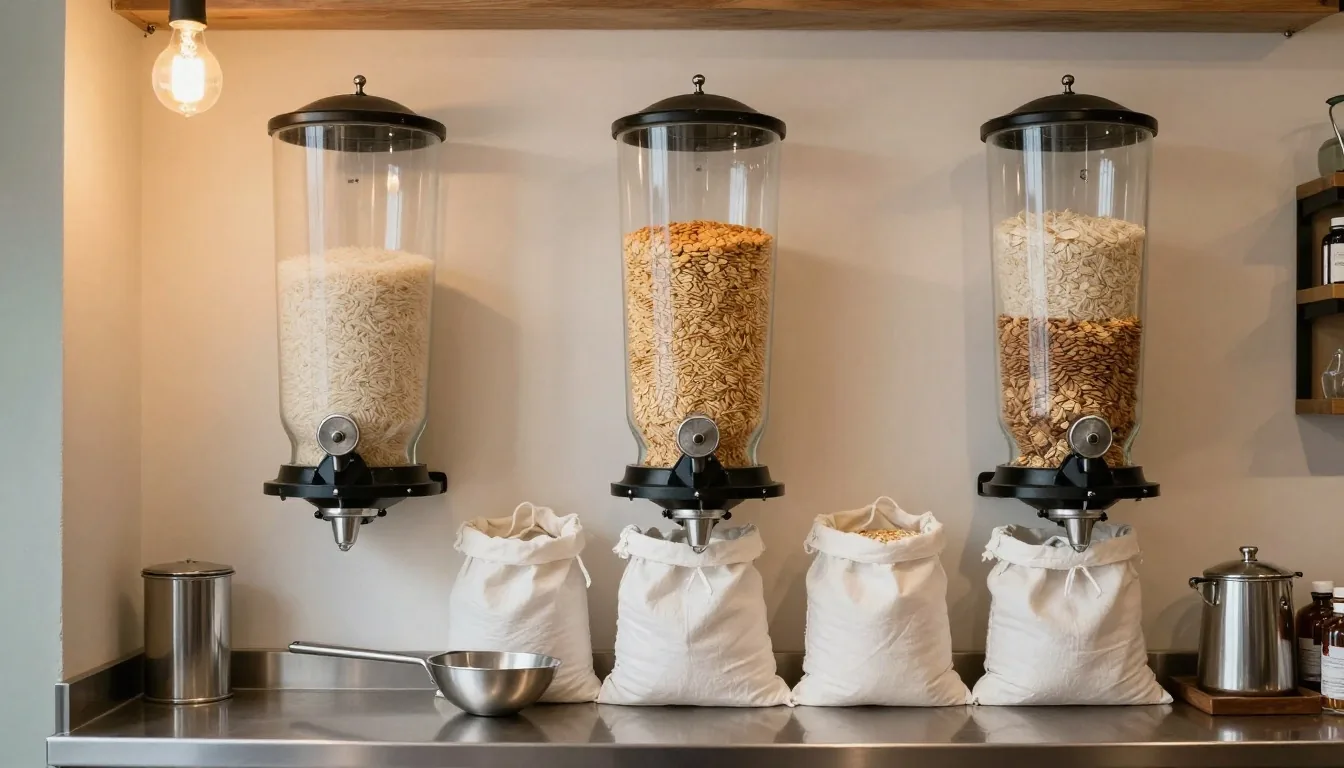
Packaging is harder than food because you do not control it. You can, however, shift where you shop and what you buy. Loose fruit and vegetables avoid plastic trays and film. Refill shops let you bring your own containers for dry goods, cleaning products, and sometimes oil. Markets and greengrocers often sell loose by default.
You will not eliminate packaging entirely. Aim to reduce it where the swap is easy, and do not beat yourself up over the rest. Learning how to buy in bulk, even if only a few dry goods at a time, is a plastic free alternatives step most people can take within a month.
Five items, no more
A useful starter kit is small. You can add refillable cleaning bottles, beeswax wraps, or a compost caddy later if they fit how you live. Ignore kits that arrive with twenty items — half of them sit unused in a drawer. These are the sustainable home essentials that actually get used.
Six to ten squares. Replace kitchen roll and clean the counter just as well.
Light cotton or mesh. Keep them where you will actually see them before leaving the house.
One that you will carry. Size to your bag, not to a fantasy of long hikes.
Countertop caddy or a lidded jar. This is the one item beginners most often skip and then regret.
No purchase needed. Learning how to upcycle glass jars you already have is one of the simplest of the creative upcycling ideas, and it covers dry goods, leftovers, and bulk shopping almost immediately.
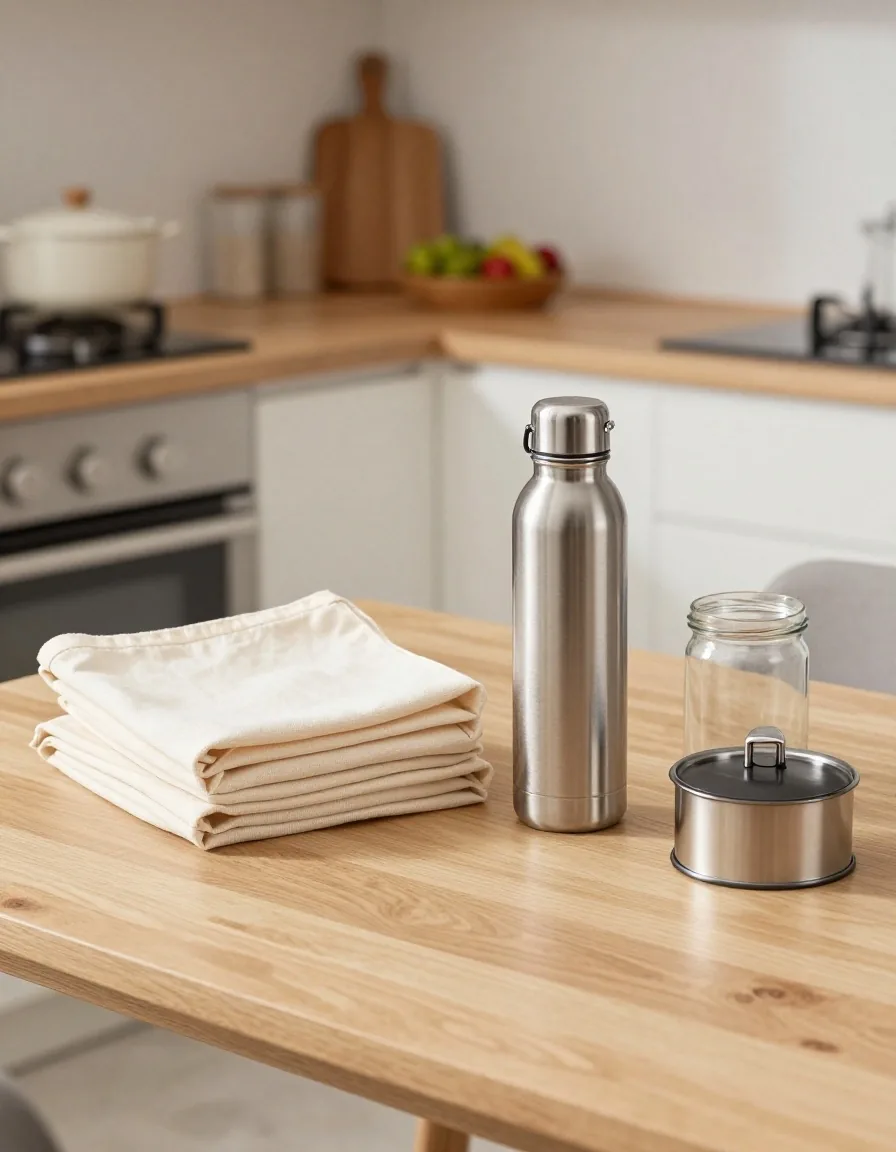
Everything in the starter kit fits on one table
Keeping an eye on it
Progress is easiest to see in what you stop buying. Fewer bin bags, fewer bottles, fewer takeaways in plastic. If you want a number, count how often you empty the kitchen bin. Going from twice a week to once is a real change.
Avoid weekly weigh-ins unless you find them motivating. For most people, they turn a simple habit into a chore — and a chore is the first thing to be dropped in a busy week.
Useful information
Some swaps fail, and that is useful information. A beeswax wrap that does not suit your kitchen, a refill shop that is too far away, a composting system that smells. Each failure tells you something about your actual routine, which is more reliable than a generic plan.
Beeswax wraps usage and care
Wraps work best on cheese, cut vegetables, and bowl covers. Keep them off raw meat, wash in cool water with a mild soap, and refresh in the oven between uses if the wax goes tacky. If they still do not suit your kitchen, do not force them.
Drop what does not work and keep what does. The goal is a set of sustainable lifestyle habits you do not have to think about.
After the first few months
After a few months, the changes become background. You stop noticing the produce bags, the cloths, the compost caddy. At that point, look at the next tier: repairing clothes, buying second-hand, reducing online deliveries, or learning a simple upcycling project.
The starter phase is over once your habits survive a bad week. That is the real test. From there, repurposing old clothes, an upcycled home decor DIY project, or a set of simple upcycling projects keep the direction moving without any new gear.
Before you commit
Three answers we get asked most often when people start putting the guide into practice. If yours is not here, send us a question and we will answer it.
Most people notice a smaller bin within a month of starting with food and packaging. Bigger changes take a season or two to bed in. Give the first three swaps a full month before adding anything else.
No. The guide is about waste, not diet. Reducing food waste applies whatever you eat. The kitchen and shopping swaps page covers the food side in more detail if you want to go further.
A countertop composter or a worm bin handles scraps indoors. The Composting at Home page covers both, including what to do about smell and where to site a bin in a small flat.
Next step
Read the guide once, choose the chapter that matches your bin, and give it two weeks. The changes that stick are the small, unglamorous ones.
GreenLoop Living is an editorial resource for UK households. For questions about a swap, a bin, or a page in the guide, send us a question or write to [email protected].