GreenLoop Living

The case for keeping scraps

Why compost instead of binning scraps

Food waste in landfill breaks down without oxygen and produces methane, a potent greenhouse gas. Composted at home, the same scraps break down aerobically and become a soil improver instead. You also cut the weight and smell of your general waste, which matters if your council collects fortnightly.

Even a small amount of composting reduces what leaves your home. You do not need a big garden to make it worthwhile — a single countertop crock feeding one outdoor bin keeps a surprising share of your kitchen waste out of the general collection.

In the bin
Vegetable peelings, fruit scraps, coffee grounds, grass clippings, dry leaves, cardboard, paper.
Leave out
Cooked food in an open bin, meat, fish, dairy, oily food, pet waste, and anything treated with pesticides.
Timeframe
A full outdoor bin usually breaks down in three to six months in mild weather.

What compost needs to work

Compost is a balance of green material — nitrogen-rich and wet — and brown material, which is carbon-rich and dry. Get the ratio roughly right and the bin does the rest of the work.

The rough guide is more browns than greens by volume. If your bin smells, you need more browns. If it is dry and doing nothing, you need more greens or a splash of water.

Green

Nitrogen-rich, wet

Vegetable peelings, fruit scraps, coffee grounds and filters, loose tea leaves, fresh grass clippings, and soft plant trimmings from the garden.

Brown

Carbon-rich, dry

Cardboard torn into palm-sized pieces, plain paper, dry autumn leaves, straw, and sawdust from untreated wood only — skip MDF, plywood and anything painted.

Setting it up

Building an outdoor bin that keeps going

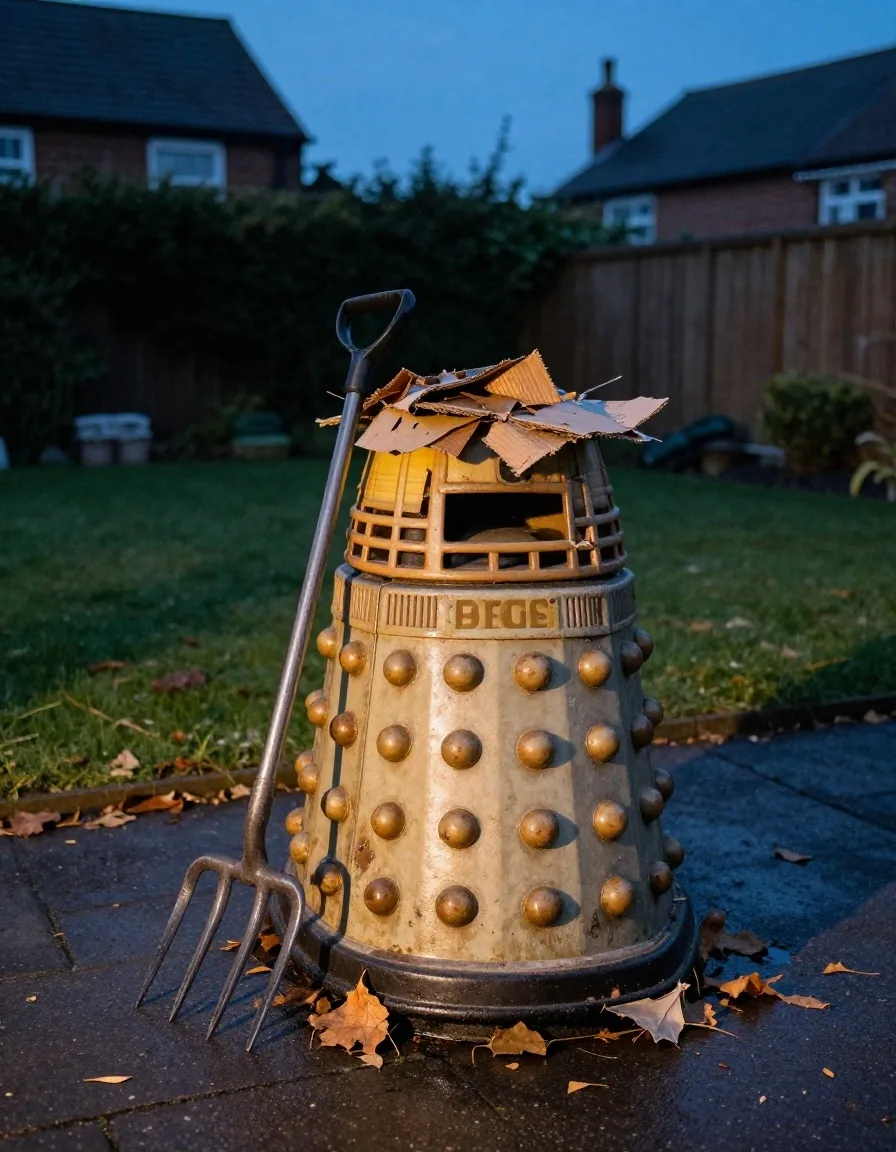
A dalek-style bin is enough for most households. Many councils sell subsidised compost bins, so it is worth checking your local authority before buying one at full price.

A dalek-style compost bin on paving in a shaded corner of a UK back garden with dry leaves and a garden fork

A simple five-step build

Work through these in order and the bin will be running within a couple of weeks. The steps are the same whether you have a whole garden or a paved yard.

1

Choose a spot on soil or paving, ideally in partial shade. Direct sun dries a bin out faster than you can keep up with in summer.

2

Start with a layer of browns at the bottom — a few handfuls of torn cardboard or dry leaves. This keeps the base draining instead of turning into sludge.

3

Add scraps in small batches and cover each one with a handful of browns. Burying food in the middle also keeps fruit flies down.

4

Turn the contents with a fork every few weeks to add air. Compost should feel like a wrung-out sponge — not soaking, not bone dry.

5

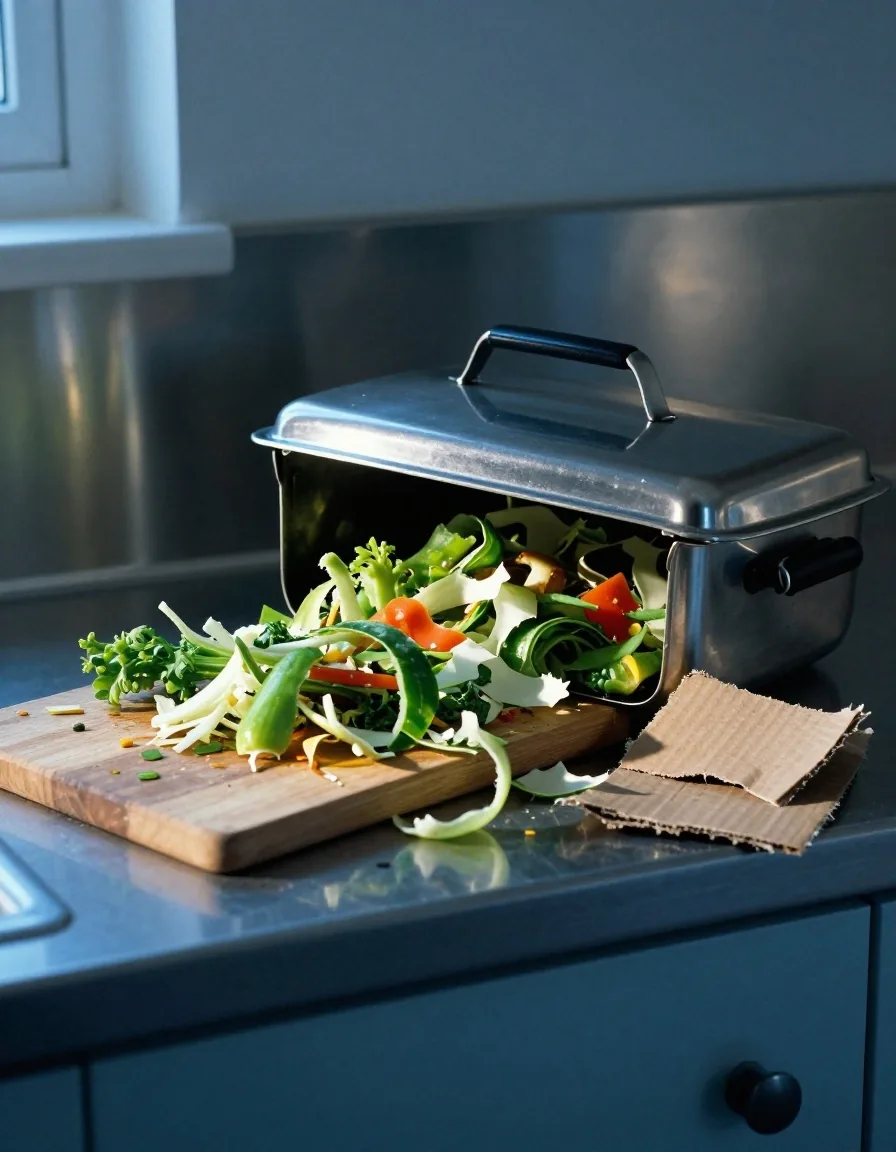
Keep a lidded container on the kitchen counter and empty it every few days rather than letting it build up and start to sour.

What you can and can't compost at home

Most confusion around home composting comes down to one question: is this kitchen item safe for an open bin? These two lists are the working answer.

Yes, add it

  • Vegetable and fruit scraps, including peelings and cores
  • Coffee grounds and paper filters
  • Tea leaves — remove plastic teabags first
  • Crushed eggshells
  • Cardboard, plain paper and grass clippings
  • Soft plant trimmings from the garden

Leave it out

  • Cooked food, in an open bin
  • Meat, fish and dairy
  • Oily or greasy food
  • Pet waste, including cat litter
  • Anything treated with pesticides
  • Perennial weeds and diseased plant material

If you want to compost cooked food, use a sealed bokashi system or a dedicated hot composter instead of an open heap.

Indoor composting without a garden

Two systems work well indoors, and both fit under a sink or on a balcony. Pick based on whether you want to compost cooked leftovers or only raw vegetable scraps.

Sealed fermentation

The bokashi bin

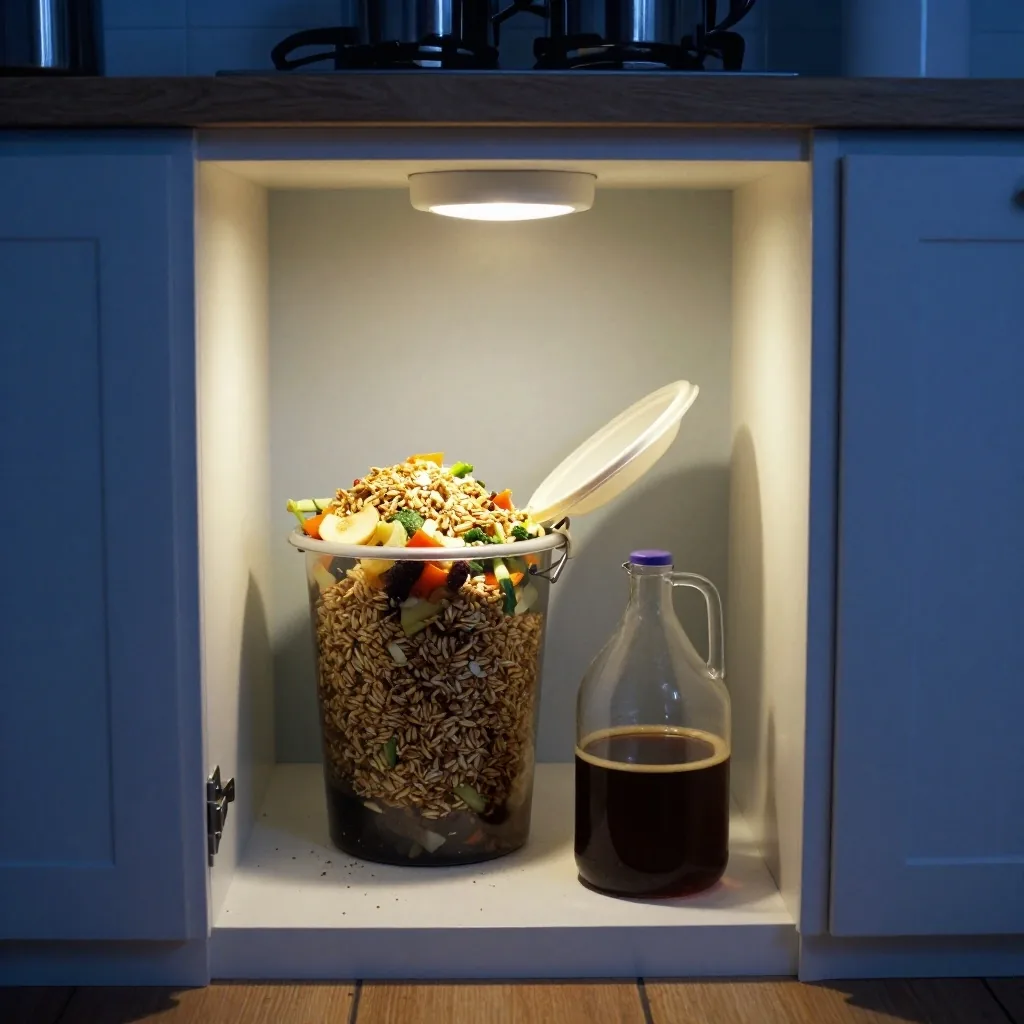
A sealed bin plus a bran inoculant ferments food scraps, including cooked food and small amounts of meat. What you get out is not finished compost but a pre-compost that can be buried or added to an outdoor bin.

Liquid drains off during fermentation and can be diluted as plant feed, roughly one part liquid to a hundred parts water.

A bokashi composting bucket open under a kitchen sink with bran-coated scraps and a jug of drained liquid beside it

Worm-powered

A worm bin

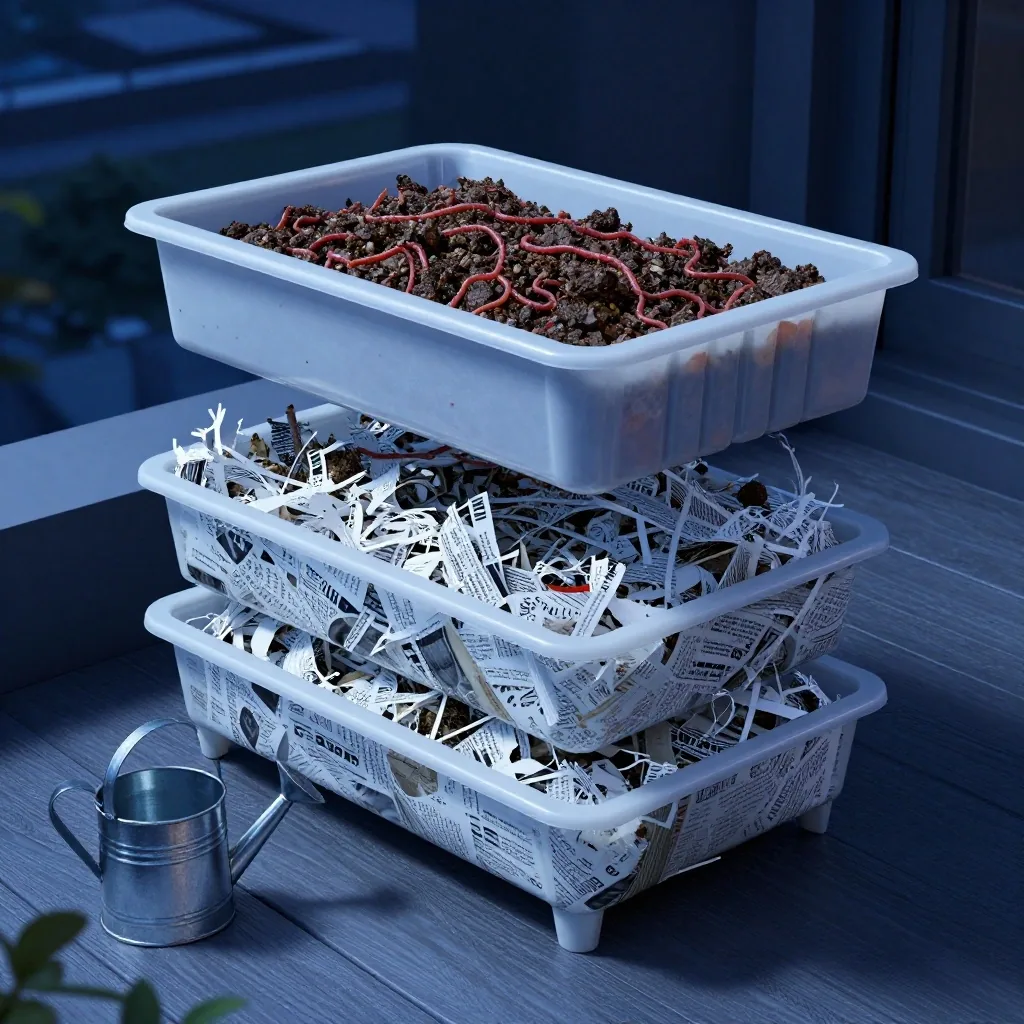
Vermicomposting uses worms to process vegetable scraps into castings, a rich dark material you can mix into potting compost. Kept properly, it is low odour and quiet.

It is less suited to cooked food, oily scraps or citrus in bulk. Keep the bedding damp like a wrung-out sponge and feed in small amounts so the worms can keep pace.

A stacked wormery on a balcony with the top tray lifted to show dark castings and shredded newspaper bedding

Smells and flies

Dealing with smells and pests

Smell usually means too much green material or too much moisture. Add browns, turn the bin, and check the base is draining.

Fruit flies

If fruit flies are a problem, bury food scraps in the middle of the pile rather than leaving them sitting on top. A lid that actually sits flat helps more than any trap.

A countertop crock with a carbon filter keeps the kitchen side quiet between empties.

Rodents

For rodents, avoid adding cooked food or meat to an open bin and keep the lid secure. A bin with a base plate or mesh underneath deters digging, and it also keeps the base cleaner.

Cold months

Composting through a UK winter

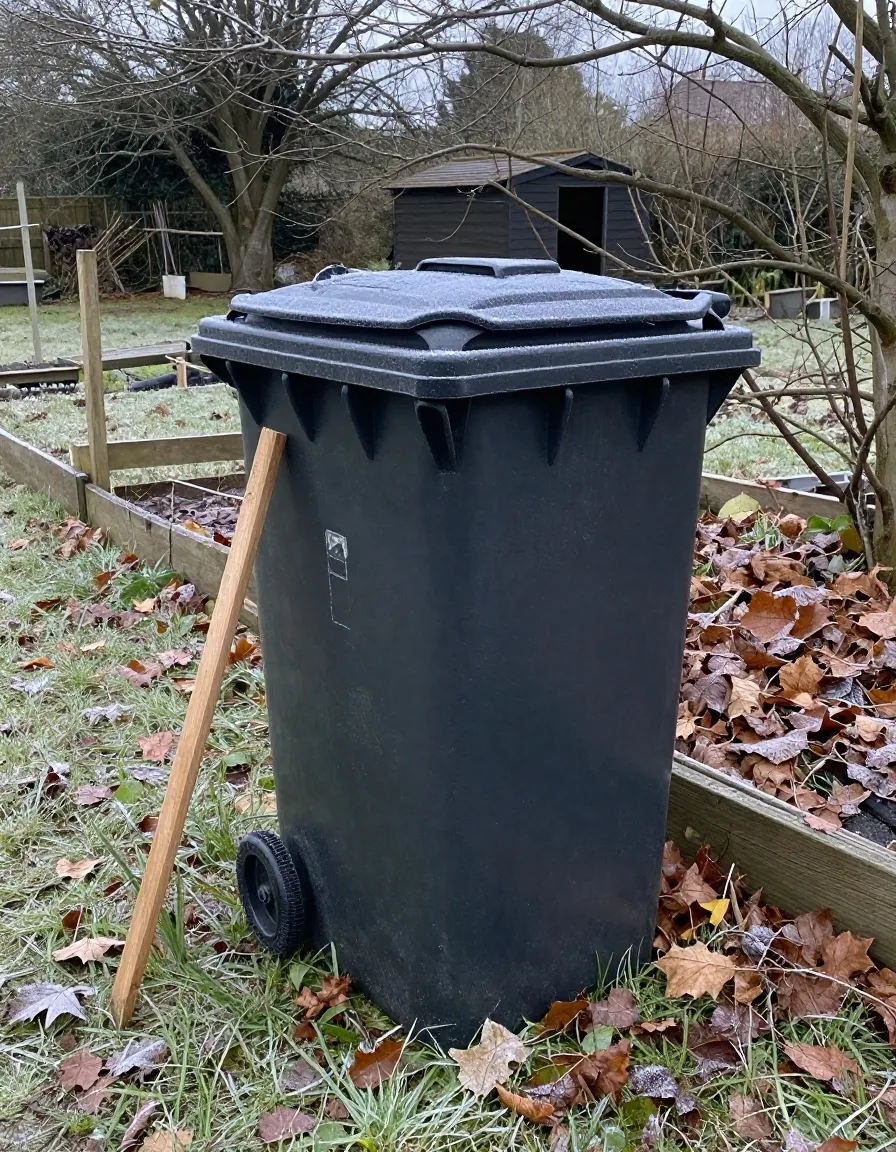
Cold weather slows the process but does not stop it. Keep adding material, add extra browns to absorb moisture, and do not expect much visible progress between December and February — the bin catches up in spring.

If you have space, keep a second bin going so you can leave one to finish while filling the other. Wrapping a bin with old carpet or a sheet of cardboard helps in hard frosts, but it is not essential and plenty of bins sit through winter uncovered.

Autumn

Keep layering. Fallen leaves are free browns — bag what you do not use for the winter months.

Winter

Expect little visible change and keep the bin draining. Do not flood it.

Spring

Turn the bin once and the pile finishes quickly as temperatures rise.

A garden compost bin with frost on the lid and fallen leaves banked against the base in a UK garden on a cold morning

Closing the loop

Using the finished compost

Finished compost is dark, crumbly and smells earthy. It should not have recognisable food scraps in it. When a batch is ready, you have three straightforward uses for it.

Soil improver

Dig a few centimetres into beds and borders before planting, or spread it on the surface and let the worms take it down.

Mulch

A layer around established plants holds moisture in summer and slowly feeds the soil underneath. Keep it clear of stems so they do not rot.

Container mix

Sieve out any lumps and mix roughly one part compost to three parts potting compost for pots, window boxes and indoor plants.

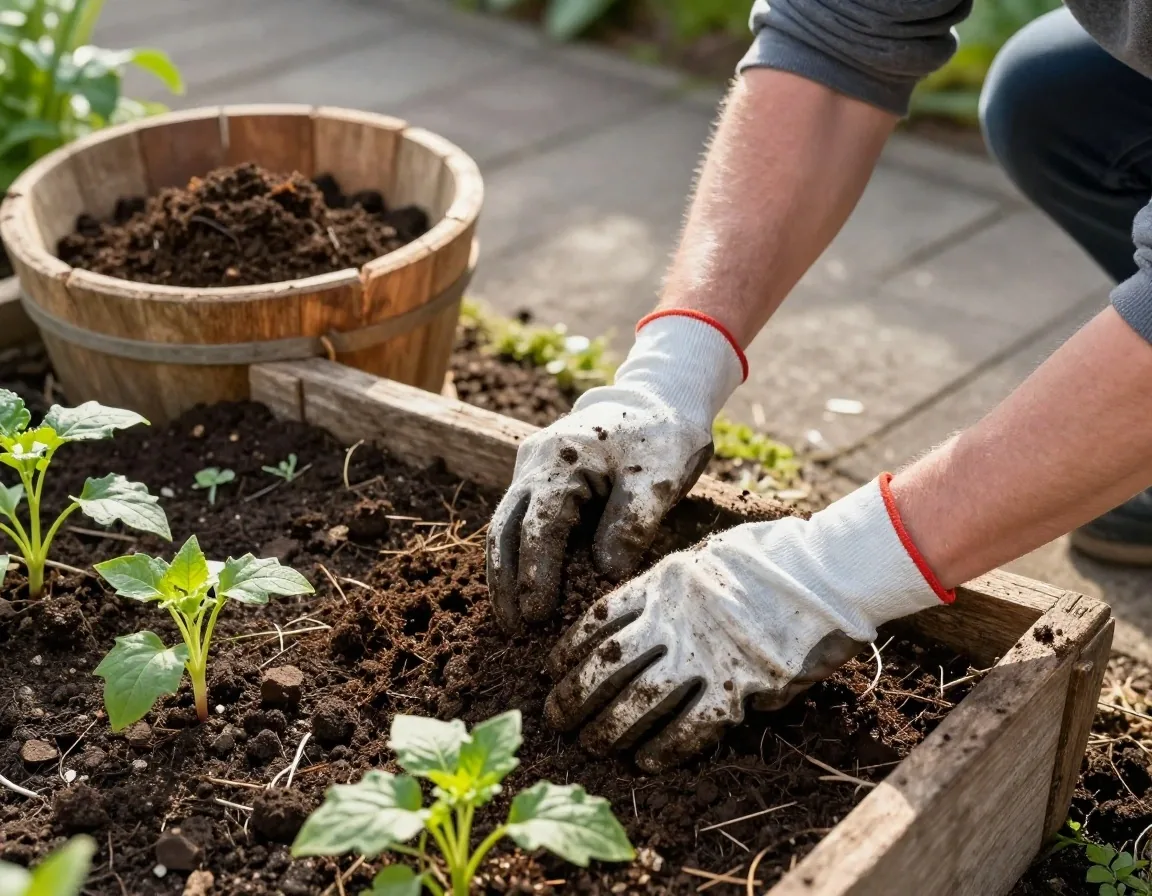
Hands crumbling dark finished compost over a garden bed beside a wooden trug on a paved path

A thin layer on lawns in spring works well too. It is gentle enough for most plants and adds the organic matter that helps soil hold water through a dry spell. If you are building a low waste home guide for your own household, once this loop is working you can move on to plastic free alternatives and other sustainable home essentials one change at a time.

Common questions

Questions we get asked most

Three answers that resolve most of the hesitation around starting a bin. If your question is not here, ask us directly and we will point you at the right guide.

Can I compost teabags?

Only if the bag is plastic-free. Many standard teabags contain a small amount of plastic, so check the box, switch to loose leaf, or tear the bag and empty the leaves out before adding them.

How do I stop my bin smelling?

Add more brown material like cardboard or dry leaves, and turn the contents to add air. Check the bin is draining — a bin sitting in water will always smell, no matter how many browns you add on top.

Will composting attract rats?

Not if you avoid cooked food, meat and dairy, and keep the lid secure. A base plate or mesh underneath helps, and it also keeps the base of the bin cleaner and draining better.

Keep the loop going

Start with one bin, add one swap at a time

Composting works best as part of a wider zero waste living routine at home. Read the kitchen swaps guide for the plastic free alternatives that pair with a bin, or send us a question and we will answer it directly.